Daily log archive for Jul 2026. Go to the current daily log, or browse the archive index.
Subscribe to the weekly email digest. Check sample email out.
2026-07-27
AI and Jobs
What is really happening to jobs? Separating AI hype from reality
There is also little evidence of AI depressing employment or job postings in the most highly exposed occupations. Employment trends in occupations with high exposure to AI are fairly stable. While employment growth in coding-heavy occupations has slowed somewhat, it remains positive. There is no evidence that AI adoption has negatively impacted firms’ job postings. Indeed, online job postings for software developers — a very highly exposed occupation — have been growing faster than for other occupations over the last year. Among firms that adopted enterprise AI, employment grew by 10 percent in the two years following adoption, an effect driven by firms with the highest per capita AI spending.
What about the companies announcing layoffs, increasingly citing AI as a driving factor? Both industry leaders and labor economists express some healthy skepticism about these claims. While some narrow layoffs may be connected to AI-related automation, others appear driven by a desire to free up cash flow for AI investments or to reduce headcount after pandemic-era over-hiring. Human resource executives say the impacts of AI are more evident in role consolidation and hiring avoidance in roles where AI can automate many tasks.
This doesn’t mean AI isn't having any negative impact on some workers; rather, the effects so far are more nuanced than an imminent “AI jobs apocalypse” would suggest. AI could be creating pockets of disruption that aren’t easily visible in aggregate economic data. In particular, there is some evidence that AI may be negatively affecting demand for young white-collar workers, as we discuss next.
Emily Wilson's intro to The Iliad
The Iliad by Homer, translated by Emily Wilson review – a bravura feat
After watching The Odyssey on the opening weekend, I impulse bought both The Iliad and The Odyssey translations by Emily Wilson. i haven't been reading a whole lot lately, so I figured I had nothing to lose if all I had on my Kindle were these two books, and I managed to even read a bit whenever I found time.
The strategy has worked out so far, and I have finally made it through the introduction of the The Iliad which ends on a beautiful note.
You already know the story. You will die. Everyone you love will also die. You will lose them forever. You will be sad and angry. You will weep. You will bargain. You will make demands. You will beg. You will pray. It will make no difference. Nothing you can do will bring them back. You know this. Your knowing changes nothing. This poem will make you understand this unfathomable truth again and again, as if for the very first time.
2026-07-17
Surrender as a non-stupid life strategy
Surrender as a non-stupid life strategy #life
After getting everything I wanted in my 20s, and discovering that I was still miserable, I decided that I should no longer be in charge of choosing what I want, and I slowly settled into a frame of, “I’ll do whatever God seems to want from me.”
Some years after making that decision, I’m much happier. My life is richer, and I’m doing more for others. Regularly, I react with positive disbelief when I look at what my life has become. It looks like I’ve been executing a genius strategy. But in reality, I am living in a state of ongoing confusion, just seeing what happens.
If you’ve achieved a bunch of your goals, and you’re still not happy with your life, consider giving up on self-chosen plans. Instead, listen to your life, inner and outer, and see if you can feel a current. Then fall into it, especially if it has nothing to do with the story you had about where you were supposed to be going.
This choice is known as surrender. As with most cliches, I don’t think I can explain the profound experiential content of surrender—what it feels like, why it works. But perhaps I can lay out a constellation of propositions1 that will, together, illuminate a worldview very different from the one I once inhabited.
1.2 A large percentage of human suffering is anticipatory tension, or dreading a future experience such that you actualize its potential suffering in the now. Anticipatory tension is using the illusion of knowledge to generate the illusion of control. Much of what people call planning is this.
1.6 You know that person who had important ripple effects in your life, based on a brief meeting or a kind gesture they extended to you, which meant nothing to them, but everything to you? Or that interesting stranger whose manner cast a brief spell on you, lingering in your memory disproportionately? That’s you also, you’re that person. Most of your impact on others, you will never fully apprehend or appreciate. Thus, it’s not important to know what you’re doing.
3.5 It’s nice to enjoy what you’re doing. But there is a greater liberation available: accepting that the Work in front of you is your Work, and that has little to do with how you feel.
5.2 When I insist that a relationship must survive, I begin to resent it—I become burdened by all of the little moments of inauthenticity engaged in to shield the other person. The person becomes an obstacle, someone to navigate around. When I accept that any relationship could end, and surrender to the reality of people finding their own level, I become free to relate openly, and then actual closeness happens.
2026-07-16
The ‘unquantified self’ movement
‘I trust my own body’: The rise of the unquantified self #fitness
Mainstream wellness is predicated on the belief that the more data, the better. More and more of us are tracking glucose, monitoring sleep quality and logging every run on Strava. It’s no longer enough to wake up in the morning and know whether we’ve had a good night’s sleep based on how tired we feel; now we’re encouraged to rely on a device-calculated sleep score. And yet, a revolt is underway: a growing cohort is rebelling against optimisation and moving towards something more intuitive, embodied and carefree.
Where the industry largely sees data as king, the “unquantified self” movement deems feeling the ultimate metric. Its adherents still train in gyms and live in chaotic cities, but want to align themselves as closely with nature as possible. It’s why you might see them barefoot and grounding in London Fields, or flowing through the streets of Silver Lake and Williamsburg in a pair of Hart Workshop or Vivobarefoot sneakers (they desire to be as close to barefoot as possible, naturally). They opt for beef liver supplements and organic cotton over synthetic gels and high-performance apparel.
It all comes down to the belief that not everything that contributes to wellbeing can be tracked. Expanding the category of wellness to include the subjective and intangible, they consider energy, consciousness and what “feels true.” With this comes an interest in books by self-help guru Eckhart Tolle and Rumi, the Sufi mystic poet, as well as curiosity about topics like non-dualism, ego-death and manifestation. They don’t want to quantify their wellness or themselves.
2026-07-15
Love Island
Why the smartest person you know is watching Love Island #tv
I am getting Love Island FOMO now
Danielle J Lindemann, a professor of Sociology at Lehigh University and the author of True Story: What Reality TV Says About Us, describes the genre as a funhouse mirror of our culture. “By tracing its exaggerated contours, we can come to a better understanding of ourselves. Almost everything that’s happening in real life is reflected somewhere on reality TV, from the small group interactions that happen at work and in families to the broad social constructs — race, class, gender, sexuality — that dominate our lives.”
While it’s often assumed to be consumed passively, people who truly love the genre engage with it through a far more analytical lense. With a whole online ecosystem formed around this fascination, the real fun happens after the credits roll. Online, people dissect every episode, analyse cast members’ social media posts, track timelines, compare stories, debate motivations and sometimes even uncover participants’ political affiliations.
2026-07-11
Little House on the Prairie
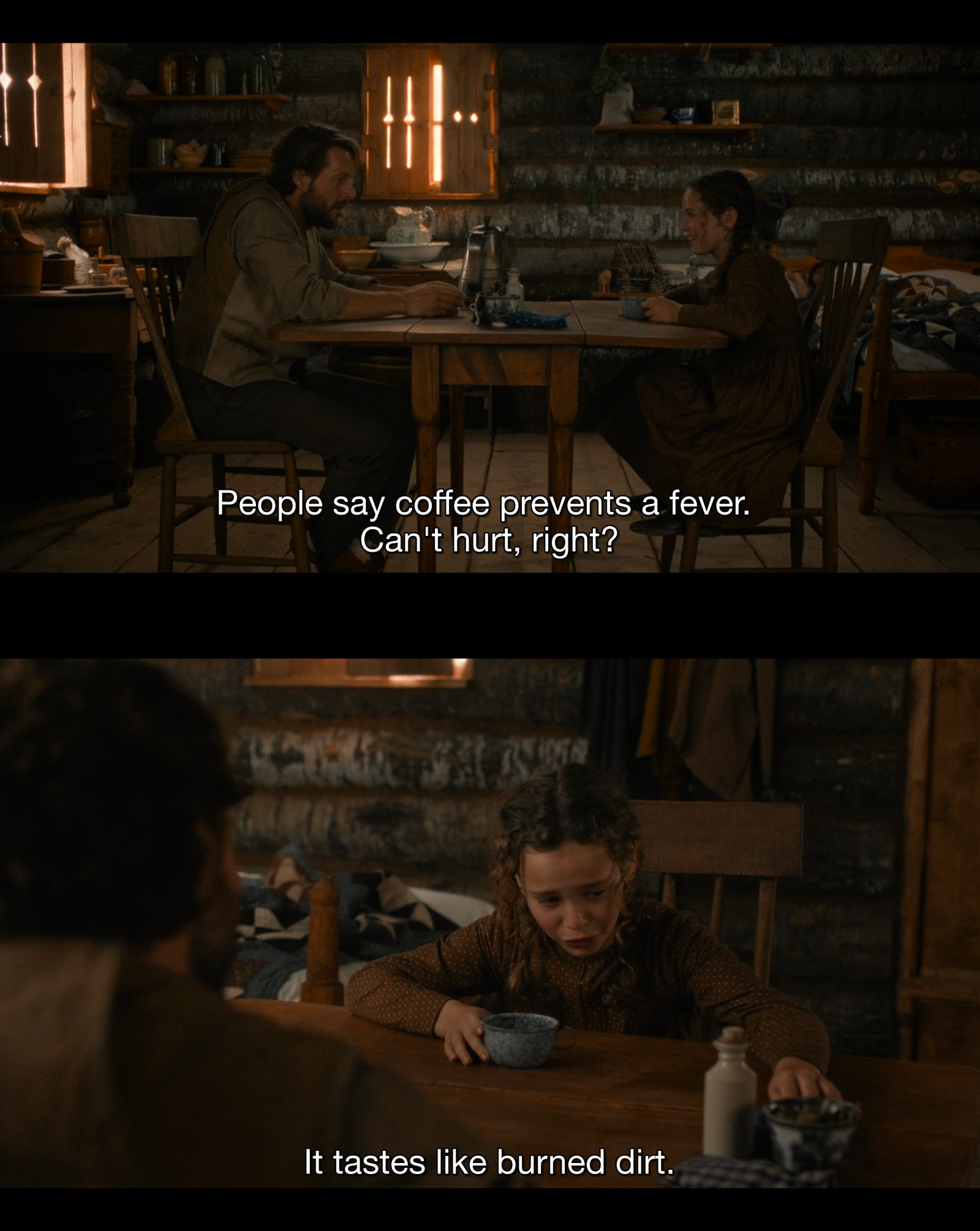
Started watching this show yesterday, and liked it: Little House on the Prairie (TV Series 2026– ) ⭐ 6.7 | Drama, Family, History #tv
2026-07-05
The Creative Act by Rick Rubin
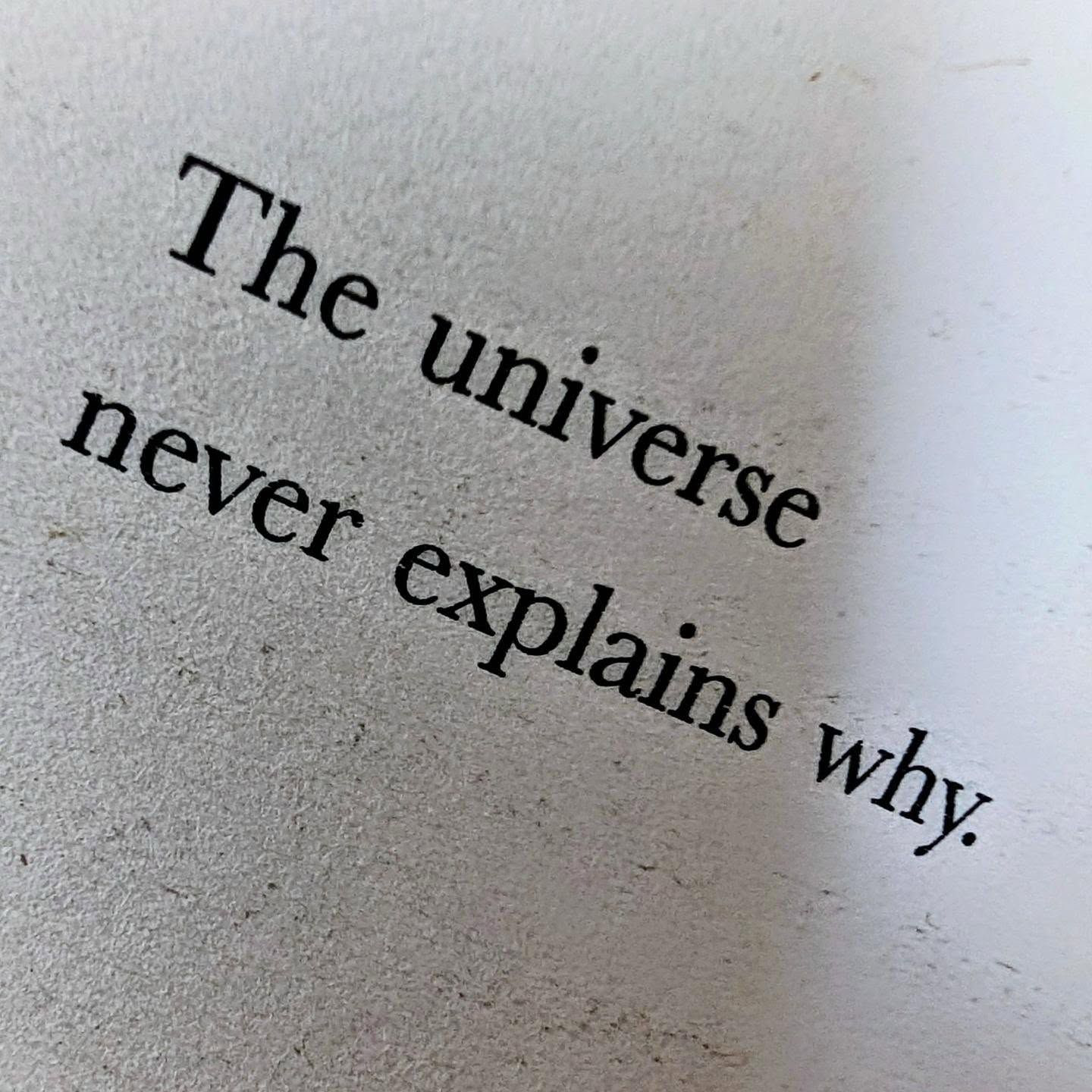
I took a really long time to finish this book, but loved most of it. This is how it ends, which I feel is a good way to capture the vibes of the entire book. #books
2026-07-01
Slop
slop ecology #culture
Publig mirrors Mike Pepi’s brilliant theory of slop materialism, which argues that instead of asking “what is slop?” we should rather be asking “when do we slop?” Unfortunately, Pepi falls into the classic trap of claiming that “slop” is exclusive to AI, which is kind of like saying drug overdoses are exclusive to fentanyl. In truth, both exacerbate an existing problem: that there are misaligned actors structurally incentivized to create low-quality content for their unsuspecting consumers.
Cultural critics like Sean Monahan and Ruby Justice Thelot make excellent arguments that “slop” has always existed. Hallmark movies, penny dreadfuls, and pulp magazines were all “slop” of their time, in that they prioritized profit over meaningful communication. Under this framing, in the words of Max Read, “slop” is something “fully optimized to its domain to the point of texturelessness or characterlessness.” I’ve also expressed a similar definition in my earlier Notes on Slop here.
The issue with regarding slop as a noun, rather than a verb, is that it decenters the productive process. Once we know we’re consuming a degraded substance, the blame rests either on the creator for producing it, or the user for participating in it.
“Slop” isn’t really your fault if you’re addicted to your phone. It’s not really the fault of the Lithuanian 24-year-old making racist videos that are good for engagement. It’s not even quite the platform’s fault. “Slop” is instead an ecology, including everything from the annotation workers in Nigeria to the data centers on indigenous land to the way you scroll on social media. Nobody is to blame, and everybody is to blame.
Personal Taste
‘Have I been influenced, or is this actually me?’ How personal taste fell out of fashion #culture #algorithms
What are you into? What floats your boat? What music, films, clothes, art, books – anything, really – do you actually like? Do you find these questions more difficult to answer than you would have done 10 years ago? How about 20? You do? You’re not alone.
It has become impossible to ignore: personal taste has been seriously debased – if not completely destroyed – by technological advancement. We know the internet has radically altered the way we form our opinions and beliefs. Now we’re waking up to another sobering truth: it has wrecked our capacity to form our own preferences.
It used to go something like this. We experienced the outside world – including arts, culture and fashion – via a combination of community, geography, mass and specialist media, and serendipitous accidents. Exposed to a range of styles, genres and ideas, we would decide what appealed to us, and then attempt (with varying degrees of success) to consume and engage with those things.
This is no longer the case. We increasingly encounter most aspects of the world through a single aperture: streaming and social media platforms. Or, more specifically, the algorithmic feeds of streaming and social media platforms, plus algorithmically optimised search engines and e-commerce sites, from Amazon to Vinted. In many cases, these are programmed to show each individual specific content based on data gathered from their own activities and those of other users – content that will ideally keep them on the platform for as long as possible. On Spotify, that can mean serving customers songs with superficial similarities to the tracks they didn’t skip last time; on Instagram, it might result in multiple appearances from an influencer whose videos have previously held our attention for a couple of minutes. We now experience reality via a limitless stream of content tailored around previous preferences.
To flout or subvert stylistic codes you have to be fluent in them – and the higher up the class structure you sit, the more latitude you have to do so. Think of the lord of the manor free to indulge his sartorial eccentricities versus uniformed blue-collar workers. In theory, though, anyone can break the rules; the most experimental dressing in the 20th century came from grassroots subcultures such as punk and the New Romantics.
On that front, it’s bad news: tech bros are the architects of our destinies and they have big taste‑based plans for humanity. In February, OpenAI’s president, Greg Brockman, posted on X that “taste is a new core skill”. He was echoing the sentiments of his former colleague Krithika Shankarraman, who last year told an interviewer that “taste is going to become a distinguishing factor in the age of AI”. Taste, the thinking goes, is the one human quality artificial intelligence will not be able to replicate. The concept of personal taste being a “moat” – a tech‑world term meaning a unique structural advantage that protects a company’s profitability – has taken root across the board.
To reclaim our personal tastes (and cultural standards) we must abandon algorithm-driven platforms. And we kind of already are: the big worry for tech bosses is that social media use is only going in one direction. According to the Financial Times, time spent on social media peaked in 2022; a recent Ofcom survey showed a 12% drop in people posting on platforms in the past year. There are a few reasons for this, but one of them is algorithmic fatigue. “There’s plenty of backlash to algorithmic feeds,” says Chayka. “The active user base of Facebook has begun declining and I think platforms like Instagram and Spotify are now seen as less influential, creative or original than a few years back.”