Daily log archive for Jun 2026. Go to the current daily log, or browse the archive index.
Subscribe to the weekly email digest. Check sample email out.
2026-06-29
Polyjammerous and Genrefluid
Accurate for me tbh! #music

2026-06-28
Everything Is Perfume Commercial #beauty
Loved this bit from Jessica DeFino's latest newsletter
**Q: I’ve spent many years of my life fixated on the way I look, but now that I’ve divested a lot more from beauty culture I find myself more and more confused as to what I should do now. It may sound like a silly question, but I genuinely don't know what I should value. Do you have any suggestions?
A:** Truth, love, freedom, equality; beauty in nature, art, and people other than yourself; creativity and expression (these things exist outside of eyeshadow); play; political action and activism (feminist policy! freedom for trans folks! socialized healthcare! living wages! labor protections! whatever!); literature; the Real; the environment; music; connection, community, collectivism; travel; learning about local birds; being a good friend; family (given or chosen); God; finding trinkets at the flea market; foraging for mushrooms; cooking; baking bread to distribute to neighbors and the needy; history; herbalism; quilting; erotic pleasure; witchcraft… Just a few ideas. There’s so much to find beyond your face.
2026-06-27
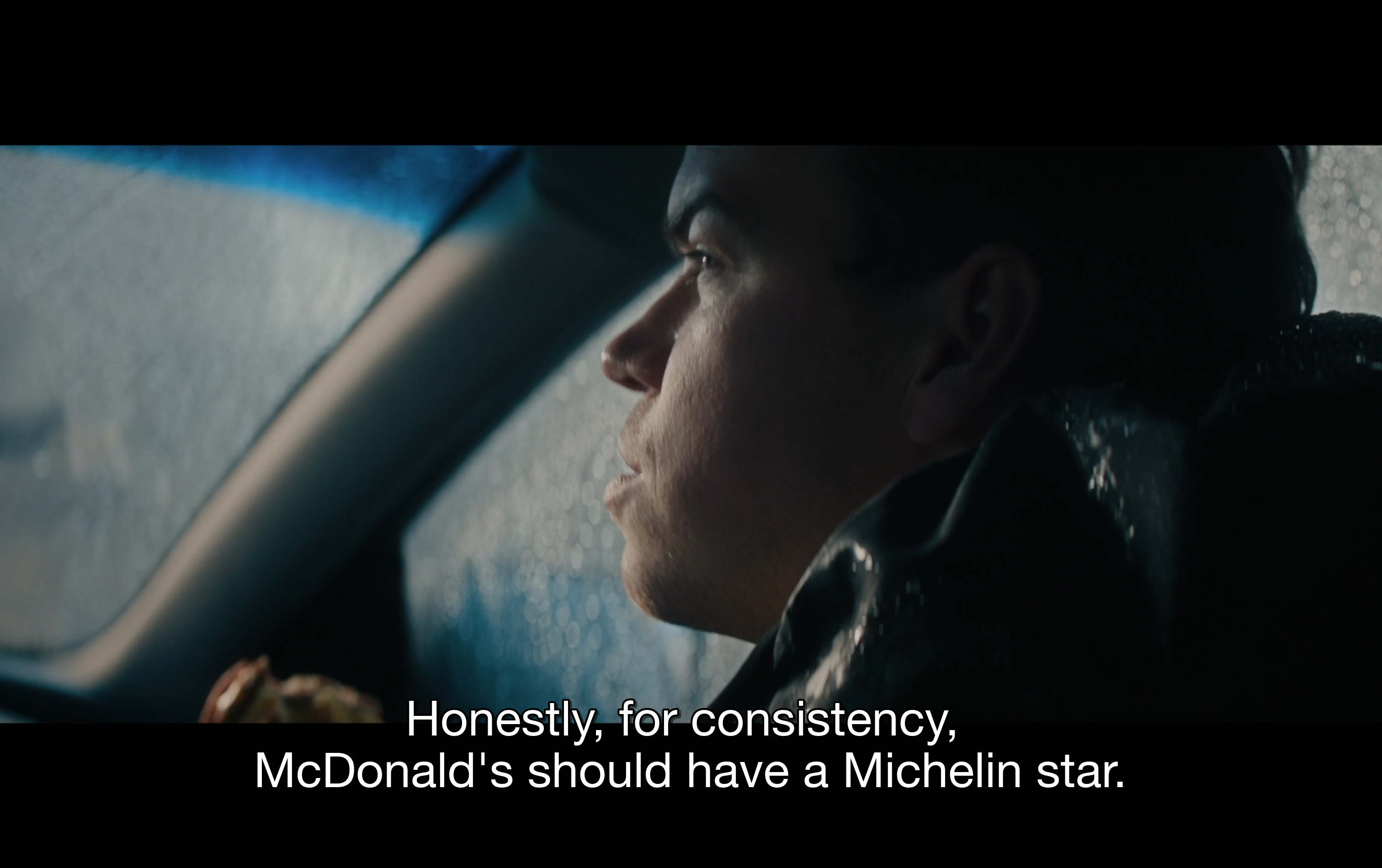
The Bear Season 5
It is back! #tv
2026-06-26
Capitalism vs Markets
If I had a penny for everytime I have argued with (both socialist left wing and libertarian right wing) folks about the difference between capitalism and markets
Within mainstream economics and politics, ‘capitalism’ is often spoken of as if it were simply the presence of markets, but markets long precede capitalism. Markets are social spaces where people engage in tit-for-tat reciprocal exchange - I’ll do X if you do Y - but this mode of behaviour was traditionally mixed with many other modes. When you encounter a vibrant street market in the Peruvian Andes, full of local villagers selling roots and herbs, it does not scream ‘CAPITALISM!’ at you, whereas a mall full of mass-produced corporate products really does.
The reason for this is that old traditional markets are rife with all sorts of ‘non-commercial’ logics, with people hanging out or lingering in each other’s stalls to catch up on gossip, and young people flirting, and old men playing chess on the side ranting about politics. These are holistic, integrated spaces, where the ‘economic’, ‘social’, ‘cultural’, and ‘political’ realm are all entangled, rather than siloed off from each other.
Moreover, the type of community who uses an old-school market is also woven together with forms of informal reciprocity. This is a term we use in anthropology to talk about webs of obligations that play out over time. Rather than ‘I’ll do X now if you do Y now’, informal reciprocity is more like “I’ll sort of do something a bit like X in a year’s time if you maybe kinda do Y in a couple weeks”. Informal reciprocity is a style of exchange, but it’s implicit rather than explicit, unmeasured rather than measured, and unenforced and deferred rather than immediate. This means it feels very different to ‘cold’ formal exchange. It’s the kind of thing we associate with community.
Finally, the oldest markets historically formed around the edges of society, rather than forming the centre. For example, feudal society had market towns, but the central defining logic of the overall economy was based on agricultural land. Similarly, ancient tribal societies could certainly engage in trade, but that was often peripheral to their clan systems, kinship structures and traditional pastoralism or horticulture.
Capitalism, by contrast, is a state of being in which breaking even is seen, ultimately, as a failure. It is a system in which everything above the break-even point - profit - is elevated in an attempt to accumulate power in the social web. It often does take place within the market, but the ultimate end goal would not be to maintain a web of egalitarian reciprocity. No, it would be to transform the Peruvian street market into a space dominated by oligarchs who have capitalized on their existing advantage to secure more. That’s what a mall is.
A society starts to feel very ‘capitalistic’ when its resources begin to concentrate into these large nodes of power, and when a class of people who own this concentration of assets start to become gatekeepers to the survival of others. Those others must prostrate themselves asking for jobs - the right to operate the owned assets - so that they can get money to buy the things outputted by those very same assets.
People continue to maintain community, but the social web starts to feel like it contains a constant underlying struggle. They find themselves under pressure to compete, and to do this will increasingly strip non-commercial ethics out of the old market. This hollows it out and leaves it with a ‘pure’ market logic siloed away from other logics, which increasingly get cast as inefficient pollutants. As this is amplified, pure market logic becomes the central driving force in a society, and the end justification for all other activity.
Seemingly Insignificant Minor Interactions
Have you heard of SIMIs? #relationships #friendships
Have you ever come across the term — and concept — of SIMIs (the Seemingly Insignificant Minor Interactions of Everyday Life)?
If you’re an introvert, especially, you might not be inclined to pay much attention to these interactions. You might (as I am) be inclined to focus mostly on your deeper relationships. And I do believe that going deep, relationally, is a deeply satisfying way to live.
But I like the concept of SIMIs too - the constellation of minor interactions that round out our days. To recommend paying attention to SIMIs is not to urge us to be more social than we actually want to be; it’s more akin to stopping to notice a flower or cloud formation.
Neuroscience studies reveal that SIMIs have the potential to shape and reshape our brains countless times. They can either strengthen existing neurocircuitry or overwrite it to create new pathways. Positive SIMIs can provide us with the opportunity to heal past adversity as new experiences overwrite the old. But negative SIMIs can further solidify past relational experiences that did not serve us then and will not serve us now or in the future. Each positive SIMI is an opportunity for neuroplastic shift, which means that the right SIMIs have the potential to alter the brain on the most fundamental molecular level — helping you attain a richer, more satisfying life.
Epictetus on Love and Loss
Epictetus on Love and Loss: The Stoic Strategy for Surviving Heartbreak
Two millennia ago, the great Stoic philosopher Epictetus (c. 55–135 AD) argued that the antidote to this gutting grief is found not in hedging ourselves against prospective loss through artificial self-protections but, when loss does come, in orienting ourselves to it and to what preceded it differently — in training ourselves not only to accept but to embrace the temporality of all things, even those we most cherish and most wish would stretch into eternity, so that when love does vanish, we are left with the irrevocable gladness that it had entered our lives at all and animated them for the time that it did.
2026-06-25
Matt Levine on Prediction Markets
Insider Trading Isn't Romantic
From Matt Levine's latest.
There are at least four ways to think about prediction markets:
They are a “truth machine,” a way for society to harness markets to figure out the probabilities of future events.
They are a way for people and businesses to hedge the financial consequences of future events.
They are an “asset class,” a way for people to get paid for predicting future events.
They are gambling, an entertainment product, a way for people to pay to generate dopamine by predicting future events.
I tend to be skeptical about the first three views; prediction markets, I often say, are mostly sports gambling, and their expected financial value for users is obviously negative. Mark Zuckerberg … agrees? Or something?
Attention
Umyazu #reading
There’s a prevailing narrative that says we’ve lost our ability to pay attention, that we need drugs or discipline or sternly-worded warnings about the dangers of social media to deal with this growing public health threat. This narrative completely obscures the fact that annihilating attention is a political project with clear benefits for the billionaire class: if we cannot attend the world, neither can we intercede in it. We become passive recipients of their worldbuilding, disenfranchised from our own responsibility to make sense of—and therefore to remake—the world around us.
AI is unsettling the self-help shelf
ChatGPT moved my cheese: AI is unsettling the self-help shelf
You could buy a self-help book, or, cheaper and quicker, just ChatGPT the highlights. According to self-help guru Tim Ferriss, author of The 4-Hour Work Week: Escape the 9–5, Live Anywhere and Join the New Rich (2007) — GenAI is killing the how-to publishing industry.
Last week Ferriss wrote in a blog post: “Using my own books as the cadaver on the table, [this is] what a fatality looks like,” mapping out sales for his five books — including The 4-Hour Body and Tools of Titans (my favourite title of the last ten years). His chart showed a small dip in 2023, the year after ChatGPT was launched, followed by ever-steeper declines. Ominously, he predicted his catalogue “will sell roughly 80 per cent fewer copies in 2026 than it did in 2022”.
2026-06-24
Coffee Video Games
Coffee Talk Tokyo Is The Coffee Video Game Of The Year
I am not much of a video games person, but I remember vaguely dabbling in the first ever game in this series during COVID times. The whole concept is really unique.
We here at Sprudge are no strangers to the video game series Coffee Talk, from Toge Productions. We’ve covered the first two games in the series and have been eagerly waiting for the latest edition, Coffee Talk Tokyo. And when it comes to video games, the track record shows, I’ve played more quirky Japanese coffee games than coffee simulators, so to be passed the baton to cover this episode is a great honor to review.
If you’re like me and can’t be bothered by perfecting a cup of pixelated coffee, I invite you to bring your mediocre pouring skills and curious mind to the Coffee Talk Tokyo.
An heir to the super chill original Coffee Talk game, set in Seattle, this newly released volume focuses on Japan’s beloved Jazz Kissa culture and omotenashi, Japan’s style of anticipatory hospitality. The game is set in the year 2026, in a quiet corner of Tokyo. Over the 17 chapters of gameplay, during the sweltering weeks from July 31 to August 15th (ending on the last night of the Obon holiday), you get to know a cast of yokai, humans, a restless ghost, and even a surprise visit from Seattle Coffee Talk regular, Hendry. All walks of life (and death) have a reason to visit, whether it’s to catch a break on their days off, in search of someone, or looking for a listening ear. You, as the shop owner, are here as the constant to your regulars’ busy, challenging days, and their moments of celebration.
2026-06-23
What the left believes
From a letter in The Economist: Were we too quick to attack “Gen Z socialism”? | Jun 20th 2026 Edition
The Economist was too quick to attack “Gen-Z socialism” (June 6th). Alexandria Ocasio-Cortez and Zohran Mamdani aren’t cold war socialists committed to central planning, vanguardism and foreign dictatorships. They are democratic pragmatists who support civil and political liberties, good governance and expanded public services. This is the stuff of “sewer socialism”, not Stalinism. Today’s socialists want to abolish the Immigration and Customs Enforcement agency because they believe in freedom of movement, and because masked thugs are kidnapping people off the streets. The push to tax billionaires comes not from a zero-sum mentality, but from witnessing massive wealth weaponised against liberal democracy itself. Like its namesake, a Green New Deal seeks to save capitalism from capitalists, and cool the planet too. Universal health care is no more a threat to American liberalism than it was to the British kind. Finally, The Economist itself has warned of the risks apartheid poses to democratic legitimacy. The horrors in Gaza have just awakened liberals to this danger.
These can all be defended on liberal grounds. There are illiberal ideas on the left, but it is the liberal ideas that are attracting followers. We should ask ourselves why we so often find that socialists express our values better than our fellow liberals.
How to launch a tech product
hilarious, and very relatable.
…They set deadlines for internal teams: all firms could benefit from a few fixed dates in the calendar where they have to show what they have been up to. But for anyone who thinks that the tech industry suffers from groupthink, these events do not reassure. It doesn’t take long to see a slickly inauthentic formula.
Speakers hand off to each other by saying things like “And now here’s Kevin,” or “To tell you more about that, over to John.” A synth-laden electronic soundtrack, muzak for developers, will blast out while one person leaves the stage and the next person takes their place. (Apple does its launches on video; the camera will find Kevin, or John, lurking somewhere on its Cupertino campus.)
Kevin or John will be wearing an open-neck shirt, dark trousers and shoes with cushioned white soles. The only people who can wear sensible shoes on stage are customers from a boring industry like banking: their function is to show that regulated industries are clients, and it is important they look staid. No one can wear a tie. If you see someone wearing a tie, they are a security guard.
Kevin or John or whoever will stride into view, plant their feet apart and wait for the music to stop. They will look at the audience and, for reasons that are unclear, say: “Wow!” Then they will look at the autocue and start speaking. Every three seconds, they will raise their hands up from their sides and hold an imaginary cardboard box. To mix it up—they’re not robots!—they occasionally hold out their hands as though each contains a mango. Every two minutes they will move to one side of the stage, plant their feet and start doing the box or mango thing again.
No matter what Kevin or John is announcing, they will say they are “super-excited” about it. They might be telling the world that they have discovered a way to teleport, or revealing that a device is now available in a slightly different colour, but it will be impossible to tell from their monotonically rapturous delivery.
…
Kevin or John’s segment will end just as it began. They will say, “And now here’s Rohan,” or “Over to Mike,” and walk off the stage while the giant screen behind them does something vibrant and the muzak starts up again. Rohan or Mike will stride on, stand just where their predecessor did, and say: “Wow!”
2026-06-19
AI and hiring
Agents changed everything about hiring except the outcome
Well, hiring was probably broken, but AI didn’t change the outcome.
Instead, it made it into an arms race where candidates are sold AI tools that help them apply to companies and roles en masse in an automated way. On the other side, recruiters who have increasingly gotten tired of the same AI-generated answers, resumes, and artefacts that have been generated by AI have resorted to deploying AI systems to filter out candidates and get what they are looking for. And AI companies sit on both sides of the transaction, billing tokens while hiring outcomes come back to exactly where they were.
The tragedy is that AI companies profit from both sides of the world they’ve created. On one hand, they’ll charge people to create huge volumes of cheap, low-quality content, and then they’ll charge humans to protect them from it.
Different framing on mental illness
We call it "mental illness." We could call it "a brain doing its best in an environment it wasn't designed for." The second framing isn't a kind lie - It's simply more accurate. And it gestures toward completely different interventions.
The whole thread is worth reading.
I found this amazing report on the role of Evolutionary Psychiatry approaches: Before Evolution: The State of Mental Health
This report examines the state of mental health research, treatment, and policy across eleven sections. Its central argument is that dominant paradigms — including neuroscience, genetics, and pharmacology — have not, despite enormous investment, delivered the breakthroughs that were expected; and that evolutionary biology offers a powerful complementary framework that has been largely absent from mental health science, education, and clinical practice worldwide. Evolutionary thinking does not replace existing approaches — it provides the explanatory context within which their findings make sense, and points towards new directions for research into prevention and treatment that could be applicable across cultures and healthcare systems. Evolutionary theory has revolutionised our understanding of biology over the last century. It could do the same for the understanding and treatment of mental health.
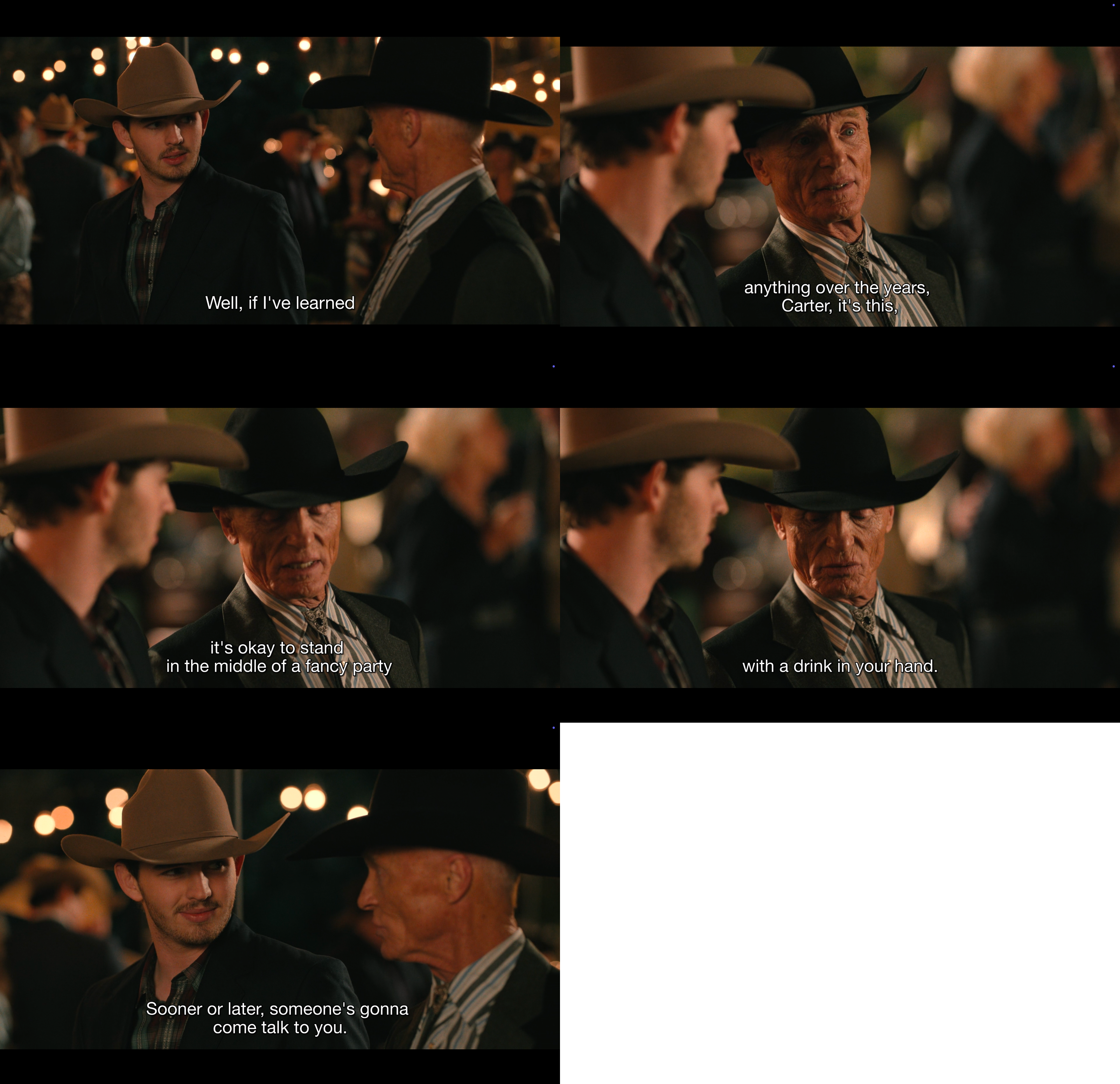
Dutton Ranch Wisdom
Today's wisdom from Dutton Ranch S01E07
No Other Choice
[No Other Choice (2025)](https://letterboxd.com/film/no-other-choice-2025/ #movies
I am only a third through the movie, but this review was hilarious and relatable at the same time.

2026-06-18
Kombucha is the next tequila
If Kombucha’s the New Tequila, What’s Next for Alcohol Brands?
Logged only for the headline because Kombucha being the next Tequila is the trend I am here for.
2026-06-17
AI reliability
AI Builds Some Pyramids - Bloomberg
Nice quote from Matt Levine's latest.
It’s a fascinating recursive vulnerability: Modern AI relies on trusted human sources to understand the world, but humans increasingly rely on AI to understand the world. If the trusted human sources take whatever AI says at face value, then whatever AI says will just become fact. Who can dispute what both Claude and KPMG say is true?
Samurai culture and death
How to Live Fully: The Samurai Guide to Dying Every Day
The great paradox of human life is that our mortality is the fulcrum of our search for meaning — the yearning to make this brief lungful of life matter amid the breathless void of space and time — and yet we spend our lives obviating the fact that we are mortal. If we are lucky enough, if we are lucid enough, it may take us less than a lifetime to learn that to deny death is to deny life.
When Did White-Collar Work Start to Look So Bleak?
When Did White-Collar Work Start to Look So Bleak?
The historian Dylan Gottlieb, in his new book, “Yuppies: The Bankers, Lawyers, Joggers, and Gourmands Who Conquered New York” (Harvard University Press), considers his subject with an eye to this interior view. Gottlieb is no yuppie apologist, but he offers a portrait of yuppie motivations with more nuance than simple consumerism. He does so by focussing on the thing that defined yuppies more deeply than their fondness for Chardonnay or sushi: their work.
Career, for Gottlieb’s yuppies, was a life style: the ethos of hard work and competition which defined their lives on the job pervaded their leisure hours as well. Long-distance running was the most blatant case in point—a punishing feat of endurance that held out the promise of quantified individual success. Marathon-training regimens were the subject of office bonding; lunch-hour jogs supplanted a previous generation’s golf and Martinis as occasions for networking. But even pursuits that might appear more obviously indulgent—dining, say—attained gruelling rigor in yuppie hands. Eschewing rote fine dining, Gottlieb writes, the yuppie “accrued more status by consuming omnivorously” (and thus dim sum earns Tess credibility with Katharine). The Zagat restaurant guide began as the hobby of a husband-and-wife pair who’d met at Yale Law, and soon became a popular business gift—one that, in Gottlieb’s telling, affirmed giver and receiver alike as “knowing members of the meritocratic elite.”
The way people feel about work is a phenomenon larger than any one job, and it involves a sprawling world of relationships. In Hochschild’s research, which she wrote up in her 1997 book, “The Time Bind,” she notices something unexpected. People told her that they wanted more time with their families, and Amerco offered policies that were, on paper, generous. Yet few took advantage of them, and, in fact, many Amerco workers seemed to gravitate toward shouldering ever more work. Sometimes this was the result of unspoken norms that official company policies had failed to counteract: an H.R. department talking up flextime didn’t suddenly dissipate the arms-race pressure ambitious employees felt to prove their dedication through long hours. Sometimes it was a response to their families’ material needs. In either case, work had come to look like a problem and a solution simultaneously. Work was a place to see friends, to accomplish tasks, to receive recognition; it was a place that promised a sense of control, which was particularly seductive because control was so frequently lacking at home. “People wonder: Where do we feel the safest?” Hochschild writes. “Even among those with lousy jobs, the answer is sometimes ‘at work.’ ”
This sense of control is the crux of Jodi Kantor’s ode to jobs. “For many of us, work is the route to satisfaction over which we often have the most agency,” she writes. “In a healthy work setting the rules of the game have clarity: if we are hard-working, strategic, skilled, and collegial, we maximize our results.” But “many of us” and “often” are hedges that are (as they say) doing a lot of work. The workplace’s sense of control can prove illusory—as it did in the era of yuppie-wrought corporate consolidation, and as it does now for graduates entering an economy destabilized by new uncertainties.
New Yorker profile of Jürgen Habermas
Jürgen Habermas Defended Reason in a Darkening Age
You wake up and brace yourself for the barrage of toxic gibberish that constitutes the modern public sphere. Your e-mail is overrun with spam, scams, and smut. There are voice mails from no one about nothing. A glance at the news reveals that the President is continuing to spew lies and obscenities; that a trillionaire is peddling white-supremacist propaganda on a social-media platform he owns; that a chart-topping musical artist is praising Hitler, or apologizing for praising Hitler, or praising Hitler once again. Publications from the Times on down employ clickbait headlines that treat you like a starving rat in a Pavlovian experiment. A.I. systems simulate the experience of talking to an arrogant ten-year-old boy who knows far less than he thinks he does. When pressed, the chatbots admit that they cannot “naturally understand human morality, dignity, culture, or meaning.” It all adds up to a continuous discursive tinnitus—a buzz of random, fake, stupid, sinister chatter that nobody wants and nobody can stop.
None of this would have surprised a previous generation of German thinkers—the group known as the Institute for Social Research, or the Frankfurt School. The institute emerged in the nineteen-twenties, went into exile during the Nazi period, and returned to Germany after the war. Its leading figures, Max Horkheimer and Theodor W. Adorno, saw capitalist society not as the antithesis of totalitarianism but as its more affable, aw-shucks twin. Citizens become commodities; technology increases the power of an already powerful few; pop culture serves up mechanized slop; truth and lies commingle. Their default mode was apocalyptic: “The fully enlightened Earth glows under the sign of triumphant disaster.” Now, with gig workers frantically self-branding, tech barons amassing unthinkable wealth, algorithms dictating consumption, A.I. infecting reality, and Earth itself turning feverish, Horkheimer and Adorno’s worst-case scenarios begin to seem overly optimistic.
At the heart of Habermas’s omnivorous, at times contradictory, body of work is an idea as simple as it is profound: in adopting the perspectives of others, we learn to become ourselves.
Adorno assails the last topic [domination of culture] in a chapter titled “Culture Industry,” which has few rivals in the annals of élite dyspepsia. “All mass culture under monopoly is identical,” he notes. Consumers have the “freedom to choose what is always the same.” He is arguing with the absent Benjamin, who saw liberatory potential in Charlie Chaplin movies. Until recently, Adorno seemed to have lost the debate. Generations of readers rejected his snobbery, his prejudice, his tendency to write sentences such as “The same babies grin endlessly from magazines, the jazz machine endlessly pounds.” But the underlying ideas sting harder now. Adorno sees mass culture as a pivotal component of the capitalist scheme to mollify the populace with calculated compensations. It claims to be serving the public while inventing needs that the public had been happy to live without. The façade is democratic—Hollywood stars are just like us!—yet the structure is authoritarian, training us to bow down before celebrity gods. The birth of a fascist President out of the spirit of reality television could be seen as a Q.E.D. for Adorno’s thesis.
The question, of course, is what we are supposed to do with these bourgeois jeremiads against bourgeois civilization, beyond enjoying them as high-end primal-scream therapy. Members of the Frankfurt School were prey to what Habermas’s colleague Karl-Otto Apel called the “performative contradiction”: if you have used the tools of reason to dismantle reason, your own work might be compromised in turn. The Marxist theorist Georg Lukács complained that Adorno and company had taken up residence in what he called the Grand Hotel Abyss—“a beautiful hotel, equipped with every comfort, on the edge of an abyss, of nothingness, of absurdity.” Habermas wished, in a sense, to vacate the hotel and traverse the abyss outside.
Adam Tooze on Tempelhofer
Transcript: Ones and Tooze - Live From Berlin | Transcript Reader
This podcast which was filmed live in Berlin is one of my favorite Ones and Tooze episodes. I have been a long time Tooze Boy, and this is him at his electric best.
His co-host Cameron Abadi introduces Tempelhofer Feld
So I wanna shift to talking about Berlin specifically, and I have another data point there. And it is 950, as in 950 acres, which is, the size of Tempelhofer Feld, which makes it one of the largest inner city public open spaces in the world. And for our listeners who are not here in Berlin, I will briefly describe what Tempelhofer Feld is. Tempelhofer Feld is the space of the former Tempelhof Airport, which is the 1st airport in Berlin. It is now in the very center of Berlin as the city grew up around it.
Here are some excerpts from Adam's response
And if you flew from city of London, it's not small, it had a short runway. And you came in, people will have seen the footage in the post war period. You come in over the rooftops of Berlin. I think it's in Wings of Desire. Think it's in Vemde's as an aerial sequence, which I think may have been taken from around there. But yeah, I mean, I guess the next time we're all there, we should think about the gateway to Germania that we're actually rollerblading in today.
And it's the general who performed that extraordinary feat who, in the summer of '48 — when the Soviets blockade Berlin in retaliation for the decision by the British and Americans to introduce the Deutsche Mark, the unifying currency of the Western zones — is put in charge of the airlift to West Berlin.
And it's a really daunting proposition, because there are about 2,300,000 civilians plus military in Berlin at the time. They reckon they don't need 300 tons like in Stalingrad, but they need 4,500 tons a day to sustain Berlin. The average transport aircraft at the time can fly 5 to 10 tons. So that's 450 flights with the heaviest aircraft in existence at the time, a day, into Berlin — into an airport which at its peak before the war, when it was the busiest airport in the world, had had 90 flights a day into Tempelhof. So this is literally the largest aerial operation ever mounted.
And they peak at being able to deliver 12,000 tons a day on this airlift. So what that means — I did the math in the green room earlier — is that they were basically landing an aircraft every minute, 12 hours a day, for 15 months. Every minute there's an aircraft landing. So then when you imagine that in the air, this is the origin of modern air traffic control.
Managing this was the largest air traffic control feat ever pulled off. They built radar stations, they brought in massive electronic infrastructure, guidance beams — all the stuff they'd used to bomb Berlin, they were now using to actually direct the traffic in. There's this amazing advertising from one of the American bombing companies which shows them bombing German children with milk after '45, rather than with high explosives and incendiaries. And basically they stack, at any given moment, about 35 airplanes in the air en route from the British bases up by Hamburg and the American bases by Frankfurt, heading towards Berlin on an absolute conveyor belt. They land, they basically have to discharge them — it's like Ryanair. They discharge them within 45 minutes — they can do it in 45 to 50 minutes — turn the aircraft around and fly it back. And in the end they deliver 2,200,000 tons of cargo. Two thirds of that is American, the other third is British.
The British literally convert wartime bombers to do this. And the freakiest thing about it — the most mind-boggling thing about it — is that two thirds of what they're shipping is coal. It's coal. So this is like the most expensive coal in the history of the world. Why are they shipping in coal? Because it's Berlin, for heaven's sake, and you're heading into the winter, and you know what this place is like from about October — and the electricity system, which is half damaged, is running on this as well. So two thirds of these heavy loads are coal, with a little bit of milk powder added, basically to keep everyone alive.
And the British repurpose flying boats to land not at Tempelhof but on some of the waterways. Why flying boats? Because they're designed to withstand saline water, and one of the things you need to ship into a beleaguered city is salt. So they literally fill North Atlantic U-boat patrol flying boats with salt and fly them in. It's a mad, bonkers thing. It's an extraordinary thing.
It would make a great game — somebody, some video game designer out there. The distance they flew would have gotten you from the Earth to the Sun. Just linger over that for a second. In propeller airplanes, in propeller airplanes in relay, they flew from the Earth to the Sun in 18 months. I mean, can we even get there with a rocket in that kind of time? It's extraordinary. It's truly mind-boggling.
2026-06-14
Alice and Steve
I am watching S01E04 of Alice and Steve, and it is kinda okay. But this was an interesting wisdom drop. #relationships

Linen
All linen is the same right? Then how can two linen products be priced so differently...? #clothing
This is such a great breakdown of what linen is and how the different quality linen products line up and what makes them different from each other. This is actually useful to me as I seriously consider buying some linen stuff.
Full transcript of the YouTube short below.
This shirt costs $30. This one costs $350. These sheets $90. And these are over 700. All four labels say the exact same thing, 100% linen, the same plant. So what are you actually paying for? This is episode 58 of Chasing Beauty. And today we're looking at the misleading labeling of linen.
The thing is, all linen comes from one plant, flax, which sounds like it should make linen simple. But it's the opposite. Because if every label says 100% linen, the entire difference lies in what the label doesn't tell you.
Let's start inside the stalk. A flax stem contains two kinds of fibers. Line fibers, long continuous strands that run the entire length of the flax plant up to almost a meter. And tow, the short broken scraps left over from processing. Long fibers mean fewer ends sticking out of the yarn. Fewer ends means less friction on your skin, less shedding, and less of that haystack scratchy feeling that people blame on the linen itself. That $30 shirt usually tow or worse cottonized flax deliberately chopped short to run on cheap cotton machinery. Linen demoted to imitate cotton.
But linen has a second secret where it grew. About 75 to 80% of the world's quality flax comes from one narrow coastal strip. It runs through France, Belgium, and the Netherlands. The flax belt. The climate there does something almost no other region can. It's called retting. The stalks are left lying in the field. An alternating rain and sun lets natural microbes slowly dissolve the glue binding the fiber to the stem. Weeks of patience, zero chemicals, and the long fibers come out intact and soft. Cheap flax gets the faster version. Chemical or hot water retting that's harsher on the fiber.
Then there's the spin. Premium yarn is wet spun. Fibers pass through hot water right before twisting. So the mill can spin them fine, smooth, and strong. That's shirting grade linen.
Now what about sheets? Here linen has a genuine superpower. Flax fiber is hollow and absorbent. It can take on a serious amount of moisture and release it fast. Linen adapts with the season. It's the anti-polyester. For sheets, quality has a key number. GSM, g per square meter. The sweet spot is roughly 170 to 230 gsm. Below that, the sheet can get flimsy. It will thin out at the center and tear at the seams. Trust me, this has happened to me so many times.
And what you need to watch out for is the industry's favorite scam, instant softness. Real linen comes off the loom crisp. Factories know you don't want to wait, so they bathe the fabric in cellulase enzymes, catalysts that literally eat the surface of the fiber to soften it. It ends up coming out buttery on day one. This can be called stonewashing or biopolishing. What it actually is is pre-aging your sheets. You're paying full price for fabric that has already spent half of its useful life.
So, how do you shop when the label refuses to help? GSM and pedigree. The sheets should feel substantial. Linen softness is supposed to be earned. Good linen starts crisp and gets better with every single wash for years. Brands that care will tell you where they got their linen and what the GSM is. And if those details are missing, that's your answer.
Henry David Thoreau Documentary
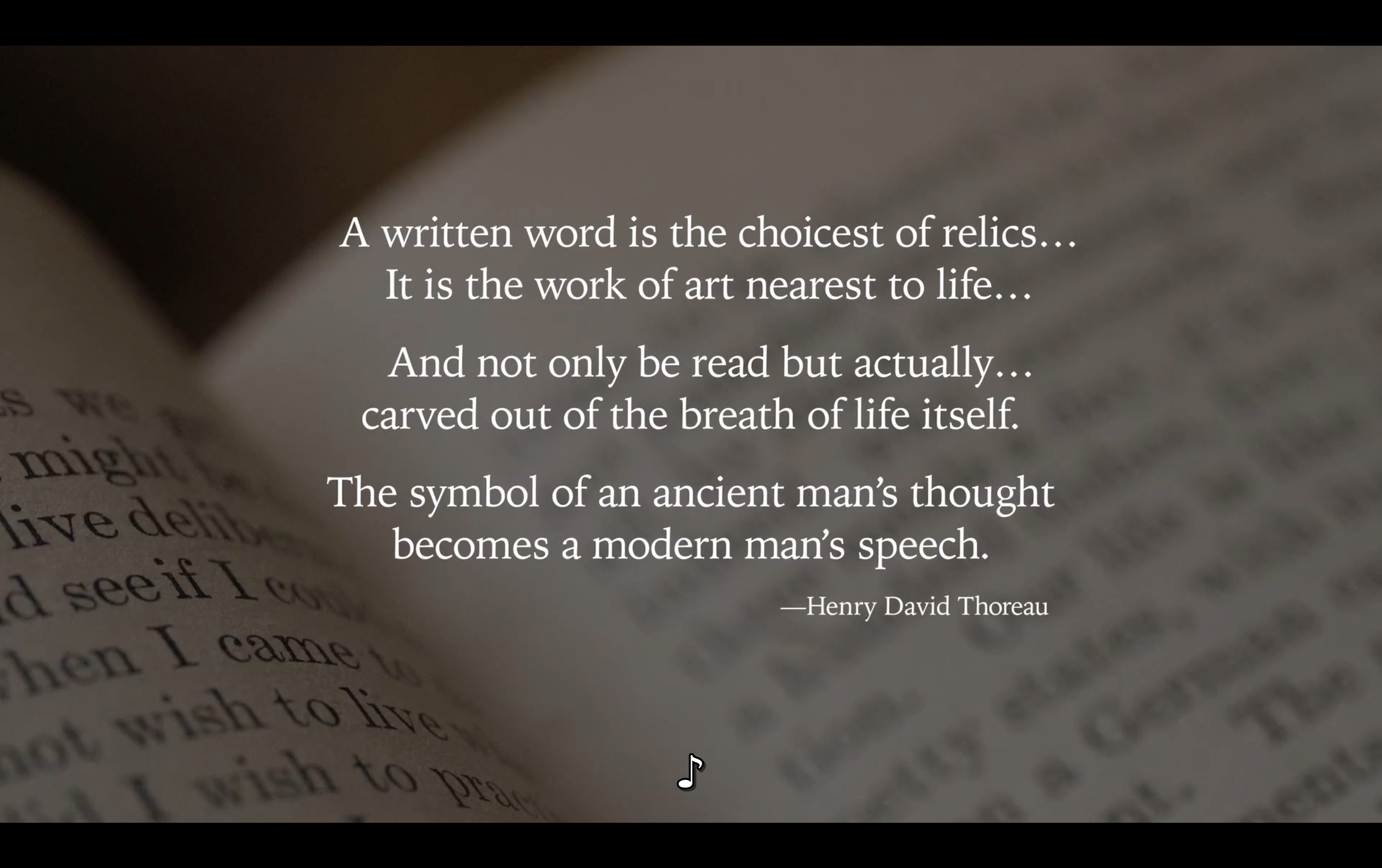 I saw this quote at the beginning of a 3-part documentary series on Henry David Thoreau that is highly recommended by The Economist.
First thought went to LLMs for some reason 🤷🏽♂️.
Henry David Thoreau (TV Mini Series 2026) ⭐ 7.9 #movies
2026-06-13
Boast of Quietness by Jose Luis Borges
Writings of light assault the darkness, more prodigous than meteors.
The tall unknowable city takes over the countryside.
Sure of my life and death, I observe the ambitious and would like to understand them.
Their day is greedy as a lariat in the air.
Their night is a rest from the rage within steel, quick to attack.
They speak of humanity.
My humanity is in feeling we are all voices of the same poverty.
They speak of homeland.
My homeland is the rhythm of a guitar, a few portraits, an old sword, the willow grove’s visible prayer as evening falls.
Time is living me.
More silent than my shadow, I pass through the loftily covetous multitude.
They are indispensible, singular, worthy of tomorrow.
My name is someone and anyone.
I walk slowly, like one who comes from so far away,
he doesn’t expect to arrive.
I was at a book launch event for Kiran Desai's latest book The Loneliness of Sonia and Sunny in German translation. In a wide ranging conversation she referenced a poem by Borges and I had to look it up.
2026-06-11
India's Mango Exports
The Ken has a nice little podcast breaking down India's mango export market.
Full Transcript: Daybreak - India's mango paradox | Transcript Reader
India produces nearly half of the world's mangoes over 24m metric tons a year. But it exports only around 30,000 tons of fresh fruit. Of every thousand mangoes, basically, that are grown in this country, roughly 1 or 2 leave it as fresh fruit. To be fair, India does export significant volumes of mango pulp. But pulp is not what commands £19 to £20 a box in London.
The fresh market is where the ambition lies, and that is precisely where India keeps losing ground. So why does a country that grows half of the world's mangoes keeps getting shut out of market after market?
Mubi Podcast about Bend It Like Beckham
BEND IT LIKE BECKHAM — Gurinder Chadha shoots and scores - MUBI Podcast
This podcast was a throwback to a very different time. But I also learned some new interesting things about how music was such a big part of the movie and how Bally Sagoo made tracks for the movie. The bit in the podcast tracing Bally Sagoo's musical history was nice.
NEETs in UK
No job, no future? Inside Britain’s new ‘Bedroom Generation’
Dave is far from the only one stuck in this cycle. It is no secret that the job market is in a dire state. Rising employment costs, the advent of AI, and ghost jobs have created a perfect storm of employment scarcity, which young people who are attempting to enter the workforce for the first time are bearing the brunt of. According to a recent government report by Alan Milburn, approximately one million young people across the UK are not in employment, education or training – ‘NEETS’. The number of NEETS is the highest it’s been in 12 years: the Milburn report refers to the situation as a “moral crisis” and paints a bleak picture of a lost, “bedroom generation”. It’s a story, Milburn writes, “that should disturb anyone who cares about the future of young people in this country”.
2026-06-09
Indian Uncles
accurate tbh
LET ME TELL you how to identify an Indian uncle. A dead giveaway is the phrase “let me tell you”. It is inevitably followed by a thesis on what really ails the country. Another hallmark is unsolicited advice, veering from career counselling (“only girls study literature”) to dietary prescriptions (“eat five soaked almonds to build immunity”). But the defining feature of the Indian uncle is his bottomless disdain for the youth of today: feckless phone-addled softies, the lot of them. They need discipline.
The uncle reigns supreme across India’s divides of religion, caste and language. He earns his radioactive confidence through the simple act of reaching middle age, thereupon instantly gaining omniscience. But despite proselytising the Way of the Uncle on WhatsApp, his authority extends only to his own circle. The uncles who run India, however, know no such boundaries. They inflict their fossilised notions upon the nation. India is a republic of the uncles, by the uncles, for the uncles.
The Indian uncle’s toolkit for dealing with criticism is limited. At home it starts and ends with “Don’t talk back okay!”
Influencers vs Evidence-based medicine
Part 1: Influencers v evidence-based medicine (part one)
Part 2: Influencers v evidence-based medicine (part two)
Very informative two-part podcast which might help you discern when to listen to health influencers. I learnt a lot about how this influencer and treatment/drug marketing works behind the scenes.
For e.g. this bit about the usefulness of various measuring devices and trackers
Assumption in healthcare, the more data we collect, the better. Yeah, that’s a much better way of thinking about my question. Condense up for you. And that’s not always the case. Sometimes it is. It’s on very much a case by case basis.
The evidence seems to suggest in terms of the footstep count and everything else, there’s a period where it’s effective and then there’s a novelty effect. And what systematic reviews have found is they don’t tend to lead to much health gain in the long run.
She knows, she’s like, why can’t I just go out and enjoy the beautiful Scottish countryside and I turn it into a festival of data misery instead with all my apps and wires and everything else.
And there can be benefits there and there can be communities, but it depends what your end goal is. But does it make you fitter? No, not necessarily.
But the problem is, is this idea of generalizability. So a lot of the studies are done on athletes where they are shaving a second off. An event means the difference between winning gold and silver. That ain’t me that’s like chugging along on a treadmill in a gym.
specifically continuous glucose monitoring
So one example is continuous glucose monitoring.
So, your body has homeostatic mechanisms. If you eat bar of chocolate, your glucose goes up and guess what? It should come back down again. If it doesn’t come back down again, then you might start thinking, do I have diabetes? Yeah.
And these devices are used for people with type 1, type 2 diabetes in particular that use insulin to monitor their condition to help them adjust their.
This is life or death.
The evidence currently would say no, we don’t know whether it makes any difference in the short or long term and the reason why you monitor your insulin or your glucose if you’ve got type 1 diabetes, the immediate effects of the ketoacidotic coma or hypoglycemia, but longer term it’s the impact on your blood vessels.
And some practical advice at the end of the first podcast.
Alok Jha [00:32:24] That’s perfectly preempted my last question, which is going to be, none of these technologies are going away. What practical advice can you give to people about how to sort of harness all of this in a constructive and informed way? Because there is something good in there, it’s just how do you find it?
Deborah Cohen [00:32:39] I think we’re learning. I think were at the foothills. So two things really, if you’re on social media is, first of all, why is this person telling me this? What is the incentive? It might be perfectly well-meaning, but how are they making the money? What’s the incentives behind them being there? And it’s just being a bit healthily sceptical. If they’re only telling me about the benefits and not telling me the harms, are they telling me their full story? If it’s a personal experience, are there other sources of information I can go to that provide more of a evidence-based look at this particular condition or treatment. You might get your preliminary sort of warmth and relationships and everything else from social media, but there are other sources. Just cross-check. And what are the conflicts of interest? And then if you’re using a wearable, why am I measuring this metric? Will altering this metric do anything good for me in the short term or even the long term? So if you’re radically change in your diet, like with the glucose example and introducing loads of burgers rather than bananas, you might think, well, further down the line, that might not be a good thing. And that’s why I wrote the book. I was trying to show people how doctors think when they’re in a healthcare setting and the questions they ask and the question they want to know when they are diagnosing or they’re interpreting tests or they are looking at the benefits and harms of treatment.
Alice and Steve
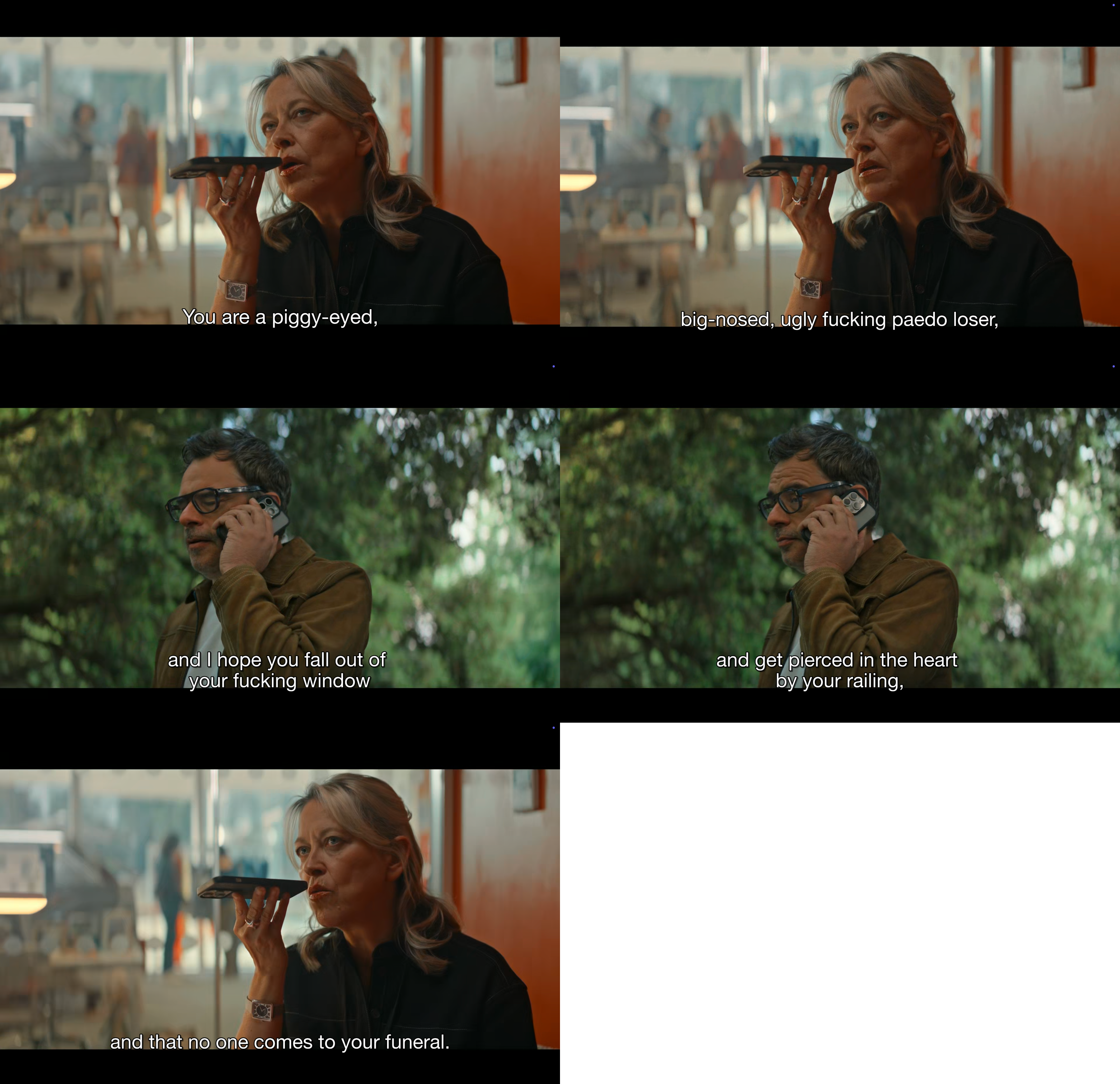
Founds this lovely British comedy on Hulu: Alice and Steve (TV Series 2026– ) ⭐ 6.3 | Comedy, Drama, Romance
A two and-a-half decades long friendship between Alice and Steve becomes strained when Steve starts dating Alice's daughter.
The effect of environment on classifying mental health "disorders"
We pathologise the kid who won't sit still, the adult who can't focus, the teenager who sleeps wrong, the griever who grieves too long, the worker who burns out. At some point the sheer number of "disorders" should make you suspect often the problem is the yardstick, or the environment , not the people.
2026-06-08
Spatial Homogenisation and Coffee Shops
Welcome to the Pinterest Ghetto
Came across this nice reel on Insta, which gave me a nice term to describe something I have always observed - "spatial homogenisation". This reel talks about it in the context of Indian coffee shops, but tbh this is true for coffee shops across the whole world.
Welcome to the Pinterest Ghetto.
Step into any specialty café from Bangalore to Bandra, shut your eyes, and try to guess what city you are in. Chances are, you can’t.
Exposed brick, industrial black metal, a lone monstera plant, and hanging Edison bulbs. It’s an identical aesthetic template that has quietly colonized our urban spaces.
In design theory, this is called spatial homogenisation. Somewhere along the line, the Indian middle class was taught that to look “sophisticated,” our spaces must mimic a gentrified warehouse in Brooklyn.
By letting global algorithms dictate our surroundings, we are substituting genuine, climate-responsive architectural restraint with theatrical props built purely for an Instagram grid.
Our public spaces are where urban culture is performed. If the stage looks identical everywhere on earth, our culture starts to feel identical, too.
It’s time to look past the feed and look again.
Here is the substack post on the same topic from the author: Lesson 1.1: The Pinterest Ghetto and the Loss of Vernacular Space
I Want You To Be Happy by Jem Calder
I Want You to Be Happy: The Sally Rooney-approved book of the summer
In the 18th century, great novels followed certain tropes. The love stories were grand and convoluted, often tragic but nearly always neatly resolved by the end. These were books about relationships which took place in grand country houses, in which communication was careful and often declared on some type of bucolic pastoral background. Marriage and babies inevitably followed. But that was then, and this is now. In 2026, nobody kisses hands over white silk gloves and promises their estate to their one true love. In 2026, we have something much worse: the situationship.
Jem Calder’s new novel, the aptly-titled I Want You To Be Happy, follows its two protagonists Chuck and Joey over the course of an (arguably) always doomed, always poorly defined relationship. It begins inauspiciously. Chuck, a 35-year-old copywriter who dreams of writing the next great novel, has just broken off an engagement with his long-term partner when he gets drunk in a bar and chats up Joey, a 23-year-old barista and sometime poet with crippling impostor syndrome. They find kinship in the threadbare nature of their lives in London; their unfulfilling jobs, the loneliness and atomisation of trying to build a life in a city that seems, by its very existence, ambiently determined to make you broke and unhappy. But this is not, let’s be clear, a love story.
“… I think older people think that people are pursuing these kinds of relationships for the sake of it, because there’s a freedom to it, but ultimately it just ends up being the hedonistic treadmill of the dating app, and another way to make you feel completely replaceable and cog-like in this very impersonal feeling city.”
But Calder, 34, does not want his novel to be read as ‘relationship negative or pessimistic’. “I think people can have meaningful encounters with other people that can be sustaining and creatively generative, and formative in terms of identity, but at the same time there’s a bitter irony as the novel goes on that this relationship just means fundamentally different things to these people.”
I Want You To Be Happy ends on an open, unfinished note. It invites the reader to imagine the possibilities for Chuck, for Joey, for every corporate drone millennial in London. It confronts us with the cold hard facts: that our capacity to imagine a world better than situationships, flat-shares, overdrafts and horrendous WhatsApp chat is up to us. Good luck.
you might be into what you say you don’t want
I’ve always thought there’s something very powerful about Carolyn Elliott’s framework of Existential Kink. Sasha has a great post about it, but I’ll roughly summarize it as integrating your shadow (in the Jungian sense) by accepting that you might be into what you say you don’t want. Like, let’s say you complain all the time about your terrible job, but you’ve refused to quit over a period of years. You might actually achieve integration by realizing that you actually, in her language, get off on hating your job. In other words, you have what you want.
The Jevons Misunderstanding
The Jevons Misunderstanding #ai #software
The Jevons Misunderstanding assumes the old production system continues to scale when demand expands as a result of the new technology.
That was more plausible in earlier industrial cases where efficiency made the existing resource economy larger.
AI is different because it can re-architect the production system itself. It:
Separates the worker from the customer,
Turns the augmented worker’s continued expertise into raw material for training,
Codifies craft by progressively unbundling previously tacit knowledge into components that can be absorbed by the tool.
Expansion no longer has to pass through the old labor bundle. It can bypass it - meaning the worker stays employed but at progressively lower wages in worse conditions, not seeing the benefits of the market expansion.
That is what the Jevons debate misses. The issue is not whether AI expands demand. It often will. The issue is whether workers sit above the algorithm, using AI as leverage, or below the algorithm, feeding the system that captures the value.